 Program URBACT může městům pomoci při řešení současných problémů | Lenka Sosvorová, Eliška Pilná
URBACT, a project to help cities to solve their current problems, by Lenka Sosvorová, Eliška Pilná
URBACT III, an operational programme for the 2014–2020 programme period, offers an opportunity for all cities to improve their strategic management. It is designed to support the exchange of experience among European cities and make it possible to apply and disseminate knowledge in all fields of sustainable and integrated urban development.
Možnosti čerpání finančních prostředků na podporu územního plánování z fondů EU a Národního programu | Ilona Kunešová
Options of drawing finance to support physical planning from EU funds and the National Programme, by Ilona Kunešová
Within the Specific Objective 3.3 (Support for producing and applying territorial development documents) of the Integrated Regional Operational Programme, calls for spatial plans, alterations to these, regulation plans and spatial studies are announced for the year 2014. What do other operational plans in the 2014–2020 programme period offer for physical planning? The National Programme of support for physical planning of municipalities addresses villages, providing them with the subsidy title Spatial Plan.
Případové studie projektu SUSREG. Energeticky udržitelné plánování v území | Karel BařinkaCase study of SUSREG: Energy-sustainable physical planning, by Karel Bařinka
These days there are more and more questions to answer as regards lowering energy demands in buildings, CO2 emission, use of renewable sources of energy and the struggle against global warming. Disregarding the discussion on scientific evidence for the reasons for climate change, the most important motive for studying these problems is to save resources by means of decreased consumption and increase energy self-sufficiency and safety in supplying energy to towns and cities. The article presents an international project that investigates these issues.
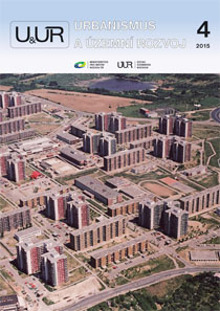
Sociální struktura velkých pražských sídlišť ve stavu, vývoji i prognóze | Michal Němec, Tomáš BrabecThe state of, developments in and a prognosis for the social structure of Prague’s large housing estates, by Michal Němec, Tomáš Brabec
This article evaluates the social structure of large prefabricated housing blocks in the capital. An analysis of the data of the 2001 and 2011 censuses has made it evident that the social structure of these housing areas is not significantly different from other parts of the city. The values of the education index are lower here, but nothing indicates an above-average concentration of people in difficult social circumstances. Nevertheless, it is also evident that most estates of prefabricated blocks are affected by decreasing numbers of inhabitants, stronger dynamics of ageing and lower progress in educational characteristics of the population. A population prognosis for the period up to 2020 counts with stagnation in the number of inhabitants and a higher rate of ageing than in the rest of the city of Prague. Also, the analysis has revealed relatively pronounced heterogeneity among Prague’s large housing estates as for the state of as well as developments in the social structure. The municipal administration should therefore pay adequate attention to planning for the future of these housing estates.
Koordinace územních plánů a pozemkových úprav | Alena NavrátilováCoordination of spatial plans and land arrangements, by Alena Navrátilová
This article comments on an updated second edition of the methodology guidelines Coordination of spatial plans and land arrangements. The aim of these guidelines is to identify points of collaboration between those who assign and elaborate spatial plans and design land arrangements. The manual is also intended for elected bodies of municipal administration.
Webová aplikace OBCEPRO.CZ | Monika Nováková Ostrava jako regionální metropole. Recenze | Jan Česelský Veřejná infrastruktura – doprava a inženýrské sítě